The main problem: Unpredictable weather
The biggest obstacle for operators of outdoor ice rinks is the unpredictability of the weather. While in the past temperatures in the winter months tended to be stable, today the mercury in many parts of Europe swings up and down like a seesaw. Temperatures can drop well below freezing, but they can just as easily climb significantly above zero, even during the day.
These temperature fluctuations place enormous demands on refrigeration technology and on keeping the ice surface in optimal condition for skating. At above-zero temperatures the ice melts, which requires continuous and energy-intensive compensation by the cooling systems.
Financial burden and energy demands
In a substantial part of Europe, operating an outdoor artificial ice rink is therefore associated with high energy costs. The cooling systems, which pump coolant into mats or pipes laid beneath the ice, must work at maximum efficiency.
These demands are reflected in the budgets of cities and operators. While natural ice would more or less maintain itself in ideal freezing conditions, artificial ice requires a continuous supply of energy for freezing, which is becoming a significant economic factor, especially at a time of rising energy prices.
The Nordic advantage
The situation is substantially different in the Nordic countries, such as Finland, Sweden or Norway. Their geographical location and naturally lower average temperatures in the winter months considerably simplify the process of making and, above all, maintaining ice.
- Lower costs: In a colder climate, refrigeration units need to expend substantially less energy to maintain the required temperature, which leads to lower operating costs.
- Longer season: The ice surface can be kept in operation for longer without fear of a sudden warm spell, which increases the return on investment.
While the Nordic countries can afford the luxury of cheaper and more stable operation, cities in Central, Western and Southern Europe have to pay a higher price for giving their citizens the joy of skating in the open air. For this reason, innovative solutions and more sustainable technologies are increasingly being sought to minimise the energy footprint of outdoor ice rinks.
A revolution in ice maintenance: HIPPOTRON® ICE technology reduces costs
While European cities struggle with unpredictable weather and the high energy costs of operating outdoor ice rinks, the Swiss town of Chur has found an elegant and innovative solution. It uses the revolutionary HIPPOTRON® ICE technology, which promises significant savings while also improving the quality of the ice surface.
How HIPPOTRON® ICE is changing the game
HIPPOTRON® ICE technology represents a breakthrough in the freezing and maintenance of artificial ice. Its principle lies in transforming the structure of water before it is used on the ice surface. This water treatment leads to several key benefits:
- Reduced energy demand: Treated water freezes faster and at a higher temperature than usual. This significantly reduces the required cooling capacity of the compressors, which leads to lower electricity consumption.
- Improved ice quality: Structurally modified ice is stronger and less brittle, which improves the skating experience and simplifies maintenance with the ice resurfacer.
The pioneering outdoor ice rink in Chur
The town of Chur became the first outdoor ice rink to deploy HIPPOTRON® ICE technology. The first operating results are very positive and exceed expectations. The rink manager reported amazing results right after the first week of comparing data with the previous season:
"After just the first week of operation, we recorded savings in freezing costs of around 30% compared with last year," the manager confirmed.
This thirty-percent saving represents a significant breakthrough in the operating economics of outdoor ice rinks and gives hope to other cities struggling with rising energy prices and climate change.
Wider use in hockey arenas
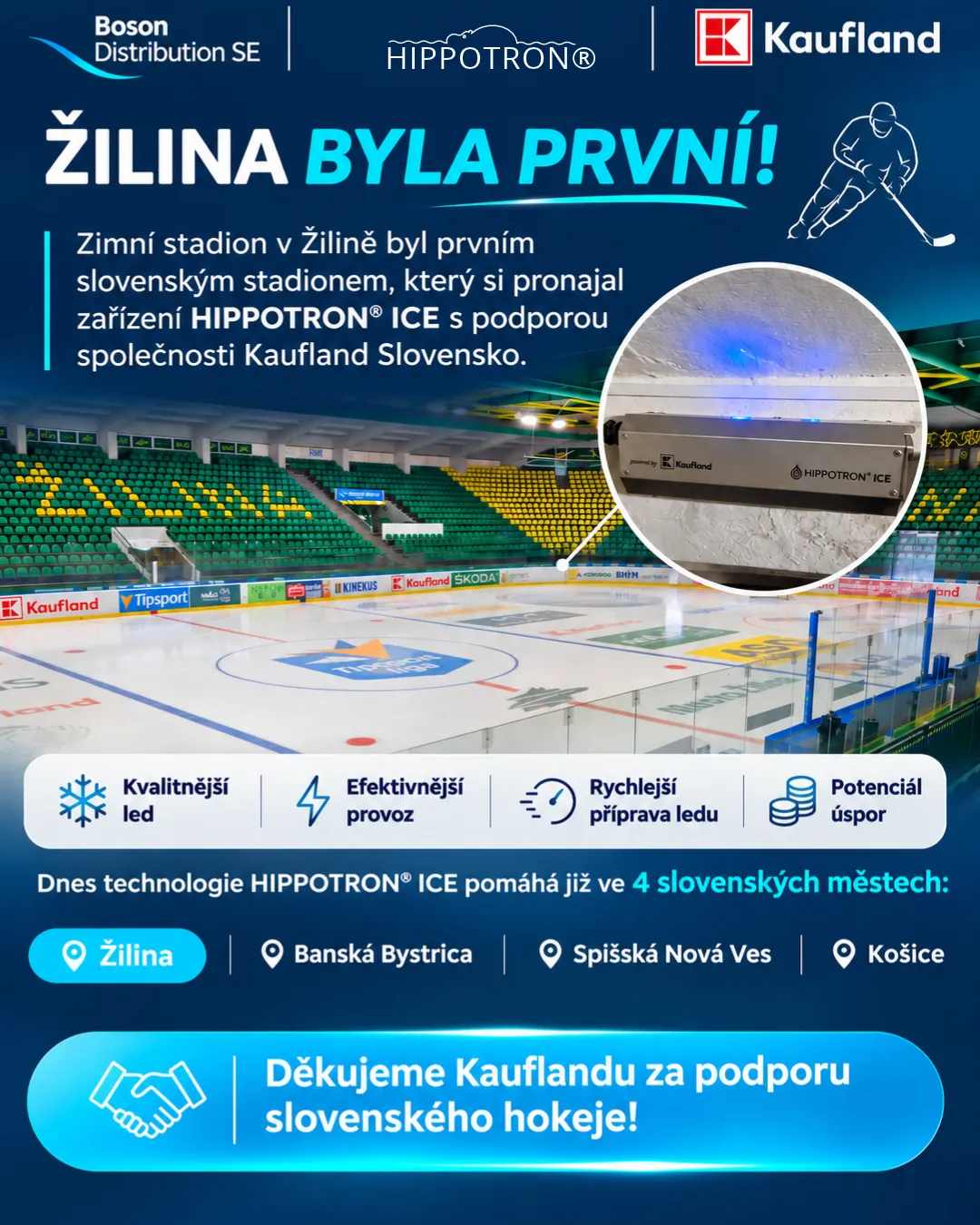
HIPPOTRON® ICE technology is no newcomer to the hockey environment. It is already successfully deployed in approximately 40 indoor sports arenas across the Czech Republic, Slovakia and Switzerland. These figures demonstrate its reliability and effectiveness even in the demanding operation of hockey arenas.
The success in Chur now opens the door to wider implementation outdoors as well, making HIPPOTRON® ICE a key element of sustainable and cost-effective winter entertainment.