Operating an ice rink has always been one of the most energy-intensive endeavors in sports facility management. However, recent years have pushed costs to an unsustainable level for clubs, municipalities, and private investors alike. Surging electricity prices are directly impacting hourly ice rental rates. While hockey players and figure skaters worldwide are forced to dig deeper into their pockets, arena management faces a critical challenge: how to maintain optimal ice quality while significantly cutting refrigeration costs?
Let’s look at the staggering disparities in ice rental prices across global and European regions, identify exactly where arenas are unknowingly bleeding money, and explore how modern technology can reverse this trend.
Global and European Market Insights: What Does an Hour of Ice Cost?
Ice rental pricing heavily depends on geographical location, local energy tariffs, market competition, and peak vs. off-peak hours. The international price fluctuations are striking:
- Czech Republic & Slovakia: Operators face significant pressure. Commercial ice rental generally ranges from €120 to €250+ (approx. 3,000 to 6,000+ CZK) per hour, with top-tier arenas in major cities charging even higher premiums during prime-time slots.
- Sweden & Finland: Nordic countries rely on a well-established network of community and club rinks. Commercial rentals cost between €100 and €250 per hour. However, extensive investments in heat recovery systems help keep their operational costs more stable.
- Germany & France: In Western Europe, ice rinks face strict environmental regulations and high electricity rates, pushing standard hourly rates to between €200 and €350.
- Canada: In the birthplace of hockey, pricing varies greatly. While municipal rinks subsidize youth programs, prime-time commercial rentals for adults in major hubs like Toronto, Calgary, or Edmonton regularly cost between $260 and $350 CAD per hour. Canada benefits from high rink density and cheaper hydroelectric power in certain provinces.
- Hong Kong: Representing the global ceiling, renting ice in this Asian metropolis costs a staggering $1,000 to $1,200 USD per hour, driven by limited space, a tropical climate, and extreme air conditioning demands.
Invisible Profit Bleeders: Where Arenas Waste Energy
Many facility managers remain unaware of the exact areas where their refrigeration systems generate the heaviest losses. An ice arena is a complex ecosystem where even minor inefficiencies lead to thousands of dollars in annual waste. The most frequent hidden culprits include:
- Poor Building Insulation and Sealing: Infiltration of warm, humid outside air forces refrigeration compressors to run continuously. This moisture settles on the ice surface, creating frost that requires frequent, costly resurfacing.
- Over-Freezing the Ice Slab: Out of fear that the ice might soften under heavy resurfacers or rising ambient temperatures, operators often maintain unnecessarily low floor slab temperatures.
- Limescale Build-up in Machinery and Resurfacers: Using untreated, hard water clogs internal plumbing, nozzles, and water heaters within the resurfacing equipment, drastically increasing the energy required to heat water for ice maintenance.
- Thermal Transfer Barriers: If the water used for ice making contains micro-air bubbles and impurities, it acts as an insulator. The under-floor cooling system must then work twice as hard to penetrate this impure layer and keep the surface solid.
The HIPPOTRONⓇ ICE Revolution: How Altering Water Structure Saves Budgets
Slashing operational expenses does not necessarily require financially devastating overhauls of cooling towers. The key lies in the very element the ice is made of—water.
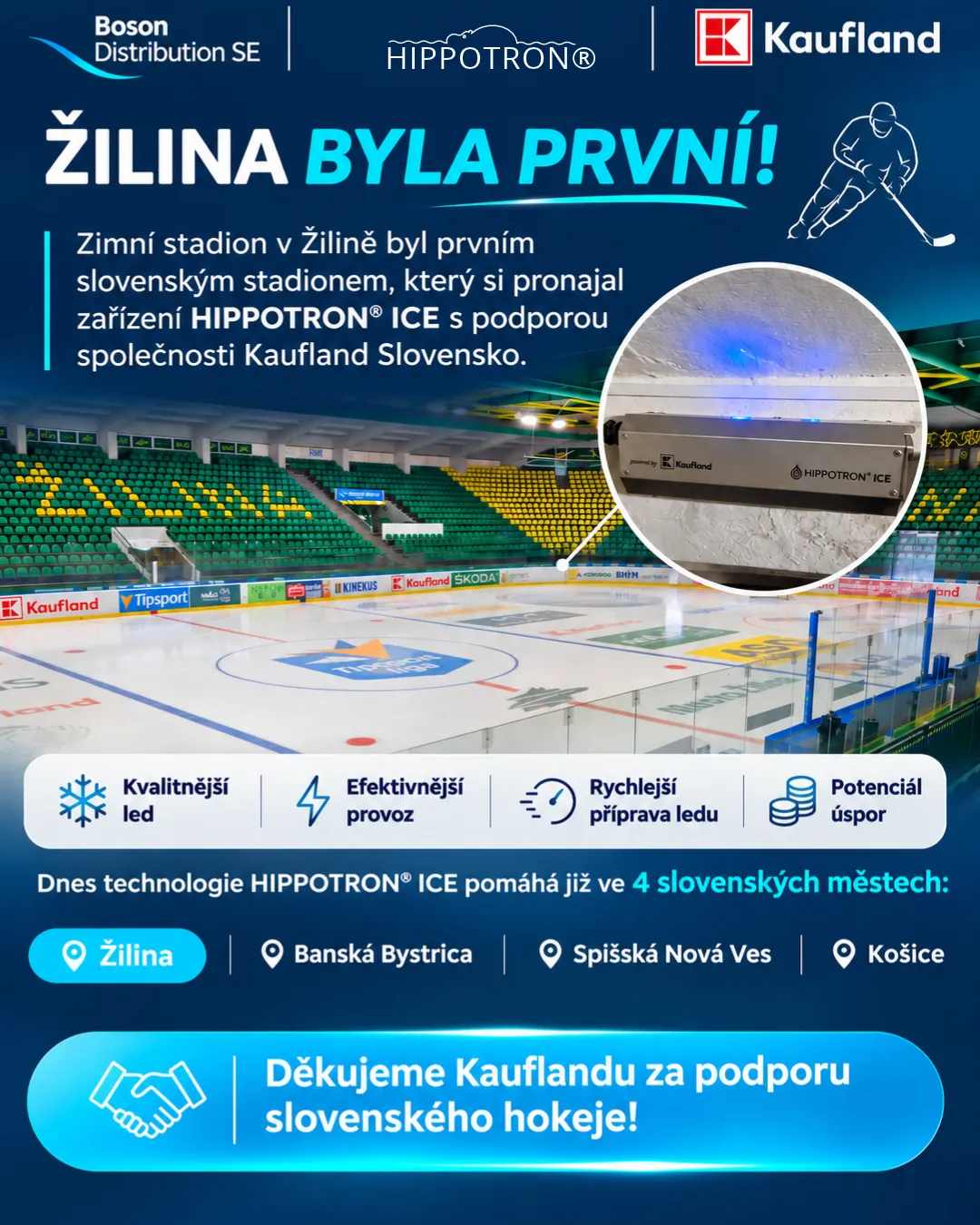
HIPPOTRONⓇ ICE technology utilizes physical water treatment to fundamentally alter its internal molecular structure. By optimizing the water’s properties, the thermal conductivity of the ice improves instantly. For arena operators, this translates into immediate, tangible benefits:
Lower Cooling Demands on the Ice Slab
Due to increased density and the elimination of micro-air pockets, ice treated with HIPPOTRONⓇ ICE transfers cold from the refrigerant to the surface much more efficiently. Consequently, management can safely raise the cooling slab temperature by 1.5°C to 2°C (e.g., from -7°C up to -5.5°C or -5°C) without any risk of softening or quality degradation. Every single degree Celsius increase yields an immediate 5% to 8% energy saving on compressor electricity consumption.
Eliminating Limescale and Optimizing Resurfacer Efficiency
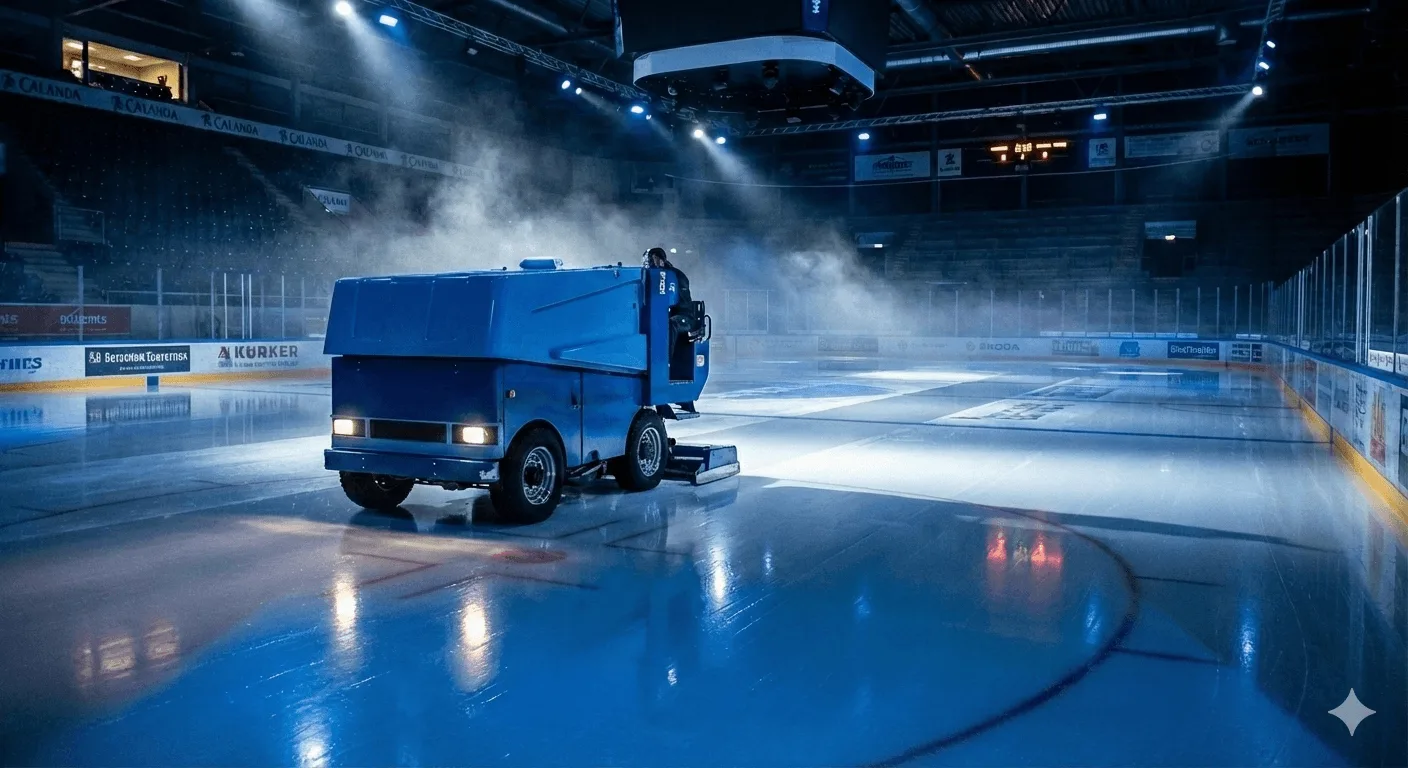
The physical transformation of dissolved minerals prevents the formation of hard limescale. This protects expensive resurfacing equipment from clogged heating elements and piping. Water heats faster, less energy is consumed, and the lifespan of the machinery is extended by years.
Harder, Thinner Ice
Structured water freezes faster, creating a crystalline lattice that is demonstrably harder and more resistant to deep skate grooves. As a result, the ice produces less snow and debris, allowing arenas to maintain a thinner overall ice sheet. A thinner ice layer requires significantly less effort from the refrigeration system.
Conclusion: Efficiency is a Marathon with a Swift ROI
The era of overlooking rink operational costs is gone. Extreme global variations in ice rental rates prove that only smartest-managed facilities will survive. Implementing HIPPOTRONⓇ ICE demonstrates that the greatest savings are often hidden in details invisible to the naked eye. By changing the water structure, operators achieve premium, faster, and safer ice for athletes, while deploying a tool that instantly stops energy bleed where it hurts most—at the electric meter.